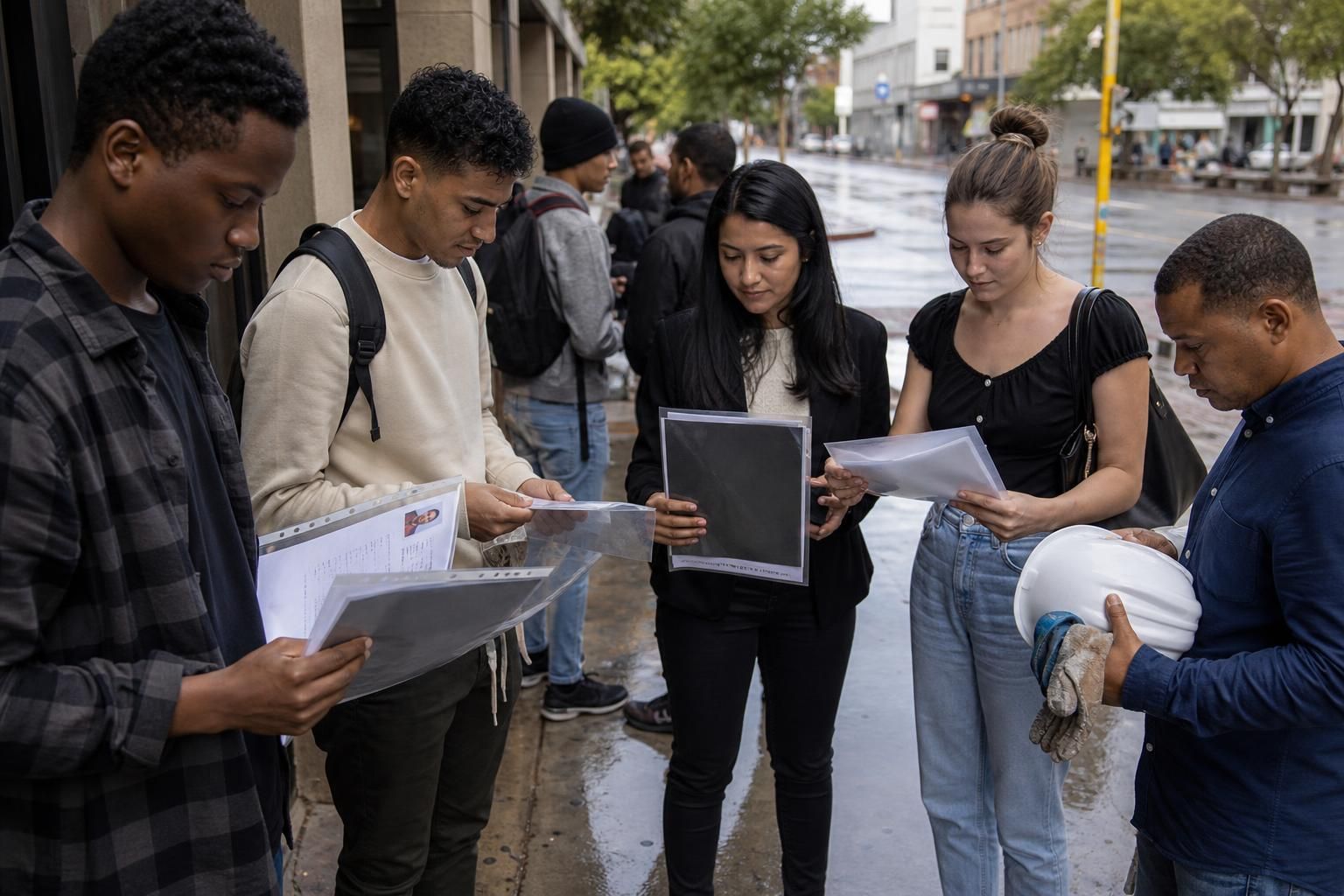
Carpenter CV: South African example + what to write (even no experience)
Use this carpenter CV layout to show the work employers actually look for: roofing, shuttering, doors, cupboards, machines, and reading plans. Copy the South African example below (plus an entry-level version if you’re a helper or still training) and adjust the bullets to match the job ad.
If you’re searching for a carpenter cv, keep it practical: list the type of carpentry you’ve done (roofing, shuttering, doors, cupboards), the tools/machines you can use, and 3–6 “proof” bullets that show quality, speed, and safe work.
Quick answer: A strong carpenter CV in South Africa is usually 1–2 pages with a short summary, a skills/tools section, then work experience written like site tasks (with measurements, materials, and plan-reading), and finally your trade test/NC(V) or short courses.
You don’t need fancy words. You need clear evidence that you can measure, cut, fit, finish, and work safely—whether you’re a qualified carpenter, a joiner, or a helper looking for your first proper role.
If you want to build and download your CV after you’ve copied your content, you can create a free CV on CV Hub and update it anytime from your profile.
What usually goes wrong on a carpenter CV (and why you get no calls)
Most carpenter CVs fail for simple reasons: they’re too generic, they don’t show the type of carpentry you do, or they read like a job description instead of proof you can deliver.
- Everything is “carpentry” but nothing is specific (roof trusses vs shuttering vs kitchen installs).
- No tools or machines listed (employers want to know if you can run a table saw, planer, router, nail gun, or just hand tools).
- No plan-reading evidence (even basic ability to work from drawings/measurements matters).
- Experience is hard to trust because there are no sizes, materials, quantities, or examples of work completed.
- Entry-level candidates hide their real experience (helping on-site, piece jobs, school/college projects, home builds) instead of presenting it clearly.
A good rule: if someone reads your CV for 15 seconds, they should know what kind of carpenter you are and what you can build/install.
Best carpenter CV format (South Africa): section order that works
Use a clean structure recruiters can scan fast. If you’re unsure about layout, CV length, or headings, it helps to follow a proven South African format (see CV format: the correct CV layout for South Africa).
Here’s a simple order that works for most carpenter roles:
- Name + contact details (cell number, email, area/suburb, licence/own transport if true)
- Short profile / summary (3–4 lines)
- Skills & tools (the “carpenter” section employers actually read)
- Work experience (most recent first)
- Education & training (trade test / NC(V) / N-levels / short courses)
- Certificates (if relevant: working at heights, first aid, health & safety, etc.)
- References (or “Available on request” if you prefer)
Keep it 1 page if you’re entry-level or have under 3 years’ experience. Go to 2 pages if you have solid projects and multiple employers. If you’re not sure, use these guidelines: How long should a CV be in South Africa?
What to write under skills for carpenters (roofing, shuttering, doors, cupboards)
This is where you stop being “any worker” and become the right carpenter for that specific job.
1) Carpentry type (pick what matches the job ad)
- Roofing carpentry: trusses, rafters, battens, fascias, barge boards, soffits, timber framing
- Shuttering/formwork: set out, assemble shutters, brace/prop, strip and clean, re-use panels, basic steel fixing support (only if you did it)
- Joinery / fitment: doors/frames, skirtings, ceilings, cupboards, kitchen units, shelving, counters, hardware fitting
- Finishing: sanding, edging, sealing/varnish, basic touch-ups, snag lists
2) Tools and machines (be honest)
- Hand tools: tape, square, level, chisels, planes, clamps, hand saws, mallet
- Power tools: circular saw, jigsaw, drill/impact, router, angle grinder, nail gun/stapler (if applicable)
- Workshop machines (if used): table saw, mitre saw, thickness planer, jointer, band saw, orbital sander
3) Technical basics that signal competence
- Accurate measuring, marking, cutting lists
- Reading basic drawings/measurements, set-out from reference points
- Material knowledge: pine/meranti, shutter ply, MDF/melamine, hardwood (only what you know)
- Site safety: PPE, housekeeping, tool checks, safe lifting
If your CV keeps getting ignored, it’s often because it’s not matched to the job ad. This guide helps you do it without rewriting from scratch: How to Tailor Your CV to a Job Description.
Copy-and-paste carpenter CV example (South Africa)
Use this as a starting point and swap out tasks to match your real experience. If you prefer a different look later, you can choose a CV design after you’ve entered your content.
[YOUR FULL NAME]
Cell: [08X XXX XXXX]
Email: [you@email.com]
Location: [Area, City]
Licence: [Code B / None] | Transport: [Own / Public]
Availability: [Immediately / 2 weeks’ notice]
Profile
[Qualified/experienced] carpenter with [X] years’ experience in [roofing carpentry / shuttering / joinery & fitment]. Comfortable working from measurements and basic drawings, using hand tools and power tools safely, and finishing work to a neat standard. Known for good set-out, clean cuts, and keeping to deadlines on site.
Key skills & tools
- Roofing carpentry: rafters, battens, fascias/soffits, timber framing (where required)
- Shuttering/formwork: assemble and brace shutters, strip and clean panels, prepare for re-use
- Joinery/fitment: hang doors, fit locks/handles, install skirtings and shelving, fit cupboards
- Finishing: sanding, edging, seal/varnish touch-ups, snag lists
- Tools: tape measure, square, level, clamps, chisels, planes; circular saw, drill/impact, jigsaw, router; nail gun (if applicable)
- Safety: PPE, safe tool use, clean work area, manual handling
Work experience
Carpenter — [Company/Contractor Name], [City]
[Month YYYY] – [Month YYYY or Present]
- Built and installed timber items on residential sites including [doors/frames/skirtings/ceilings/cupboards] to spec.
- Measured and marked accurately, cut materials with circular/table saw (where available), and checked fit before final fixing.
- Read basic drawings and followed site measurements to keep set-out consistent across rooms/levels.
- Installed hardware (hinges, locks, handles, runners) and completed snag items before handover.
- Maintained tool safety, PPE compliance, and kept the work area clean to reduce accidents and rework.
Shuttering Carpenter / Carpenter Assistant — [Company/Contractor Name], [City]
[Month YYYY] – [Month YYYY]
- Assisted with shuttering/formwork by assembling panels, bracing/props, and checking alignment with level.
- Stripped shutters after pour, cleaned panels, and stacked materials for re-use to reduce waste.
- Supported foreman with material loading, tool setup, and keeping the work area organised.
Education & training
- [Trade Test: Carpenter] — [Centre/SETA/College], [Year]
- [NC(V) / NQF / N2–N4 / Technical Matric] — [College/School], [Year]
- Short courses (if any): [Working at Heights / First Aid / OHS Rep / Hand & Power Tools], [Year]
References
[Supervisor Name] — [Company] — [Cell]
[Supervisor Name] — [Company] — [Cell]
Carpenter CV with no experience: how to write it honestly (helper + projects)
If you haven’t been employed as a carpenter yet, don’t try to “sound experienced”. Instead, show what you have done: helping on site, piece jobs, learnership/college practicals, or home projects where you measured, cut, assembled, and installed.
You can also read this for broader structure ideas: CV With No Experience: How to Fill It.
Copy-and-paste entry-level wording
[YOUR FULL NAME]
Cell: [08X XXX XXXX]
Email: [you@email.com]
Location: [Area, City]
Availability: [Immediately / Part-time / Weekends]
Profile
Entry-level carpenter / carpenter’s helper with hands-on experience assisting on [roofing/joinery/shuttering] tasks and completing small woodwork projects. Good with measuring and marking, basic tool use, and following instructions. Reliable, safety-focused, and ready to learn from senior carpenters on site.
Practical skills
- Measuring, marking, basic set-out, cutting to size (under supervision)
- Using hand tools and basic power tools safely (drill, circular saw, sander where available)
- Carrying, sorting, and preparing materials; cleaning and storing tools after shifts
- Assisting with door hanging/cupboard installation/shutter assembly (where assigned)
Experience
Carpenter’s Helper (Casual / Piece Jobs) — [Contractor/Individual], [Area]
[Month YYYY] – [Month YYYY or Present]
- Assisted with on-site carpentry tasks including carrying materials, holding/aligning components, and checking measurements before fixing.
- Helped prepare timber and boards: marking, cutting to size, sanding edges, and drilling pilot holes.
- Kept the work area clean and safe; packed and maintained tools at end of day.
Woodwork projects — Personal/College Projects
[Year] – [Year]
- Built [cupboard/bookshelf/door frame/workbench] using [pine/MDF/melamine], including measuring, cutting, assembly and finishing.
- Installed/fit [hinges/handles/runners] and corrected alignment issues to improve the finish.
Education & training
- [NC(V) Construction / Technical Subjects / N1–N3] — [College], [Year]
- Matric (if completed) — [School], [Year]
- Short courses (if any): [Hand tools & power tools], [Year]
References
[Name] — [Role/Relationship] — [Cell]
[Name] — [Role/Relationship] — [Cell]
How to describe joinery work (joiner CV) without sounding vague
If you’re applying for workshop or fitment roles, use “joinery” language where it’s accurate. A joiner CV should make it easy to picture what you’ve built and installed.
Better bullets for joinery / cupboards / doors
- Cut and assembled cupboard carcasses and doors using melamine/MDF; checked square and alignment before edging.
- Fitted hinges, runners, handles and soft-close hardware; adjusted gaps for a neat finish.
- Installed kitchen units on site: levelled base units, fixed to wall, and completed snag items before handover.
- Hung internal doors, adjusted for clearance, and installed locks/handles neatly.
If you have photos, you can mention “Portfolio available on request” (especially for joinery). Don’t attach 20 images to the CV unless the employer asked—rather keep them ready on your phone for interviews or WhatsApp when requested.
Trade test, NC(V), and short courses: what to include
List the highest, most relevant training first. If you have a trade test, put it clearly (it often matters more than school details for trade roles).
- Trade test: “Trade Test: Carpenter — [Centre], [Year]”
- NC(V): “NC(V) Level [X] Construction/Carpentry — [College], [Year]”
- Short courses: working at heights, first aid, OHS, machinery tickets (only if you completed them)
If you’re not sure how to present short courses neatly, use this guide: Certificates on a CV: How to List Short Courses.
Quick checklist: fix these before you send your carpenter CV
- Job title matches the job ad: Carpenter / Shuttering Carpenter / Joiner / Carpenter’s Helper (don’t overclaim).
- Summary is specific: mention roofing/shuttering/joinery instead of just “hard-working”.
- Tools are listed: at least 6–12 that you actually use.
- Experience bullets show proof: materials, items built/installed, basic drawings/measurements, finishing.
- Dates and locations are clear: even for casual contracts (month + year is enough).
- File name looks professional: “Firstname-Lastname-Carpenter-CV.pdf” (not “CV final final”).
- PDF is safest: unless the employer asks for Word. For more on that, see how to upload your CV online in South Africa.
Avoid this: A CV full of long paragraphs. Rather use short bullets per job so your work is easy to scan on a phone.
Next step: build your CV and keep it ready to send
Your carpenter CV should make it obvious what you can build, install, and finish—plus the tools you can use and the training you’ve completed. If you’ve copied the example wording above, you’re already ahead of most applicants.
When you’re ready, create a free CV on CV Hub so you can edit it anytime, download it, and quickly update it for each job. If you get stuck, read the CV Hub FAQ or contact CV Hub.
For more practical templates and examples, browse more CV and job search advice—or start with our related example: Handyman CV: South African example + copy-and-paste template.